

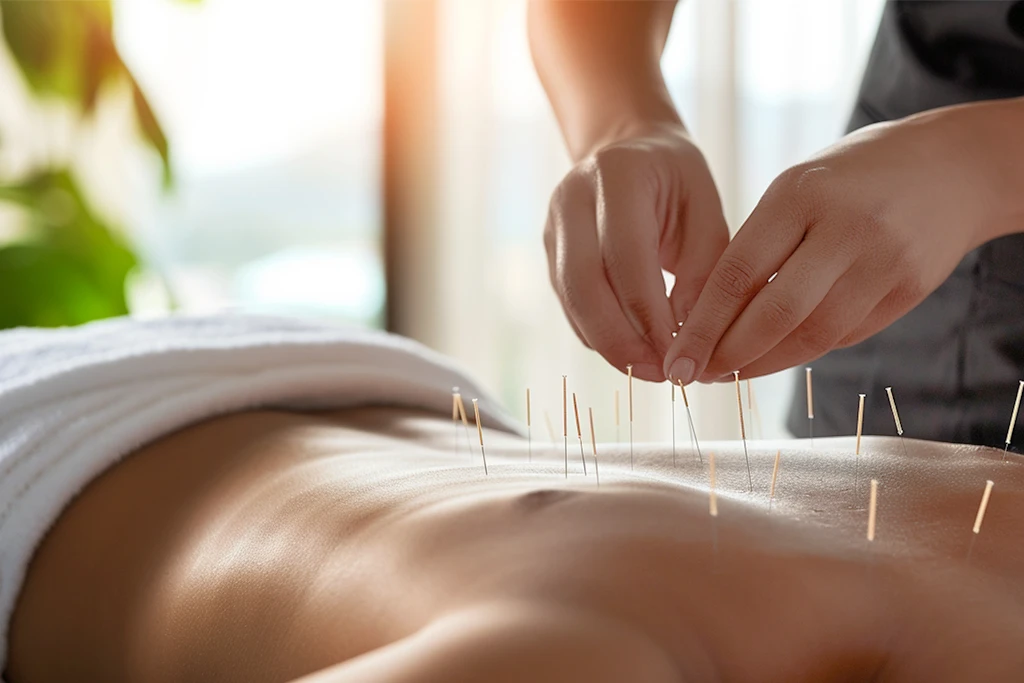
Acupuncture vs. Dry Needling: Unravelling the Pointed Differences
At first glance, both acupuncture and dry needling may seem identical: they both use thin, sterile needles for therapeutic purposes. However, they are fundamentally different in their origins, underlying philosophies, and treatment approaches.
Here is a breakdown of the key differences:
The Core Philosophy: East Meets West
The most significant distinction between these two practices is the medical framework they are built upon.
Acupuncture: The Flow of Qi
Acupuncture is an ancient practice, originating in East Asia thousands of years ago. Its philosophy is rooted in the belief that vital energy, known as “Qi” flows through the body along specific pathways called meridians. Illness or pain is believed to occur when this energy flow is blocked or out of balance.
The goal of acupuncture is to insert needles into specific points along these meridians to restore balance and promote holistic wellbeing. It treats the whole person, not just the symptom, and can address a wide range of conditions, from pain and stress to digestive issues and sleep disorders.
Dry Needling: Western Anatomy
Dry needling is a modern, Western medical technique developed in the latter half of the 20th century. It is based on scientific, evidence-based principles of anatomy, neurophysiology, and muscle function. The primary focus of dry needling is to target and release myofascial trigger points—hyperirritable, taut bands or “knots” in a muscle that can cause both localised pain and referred pain in other areas of the body. The term “dry” simply means that no fluid or medication is injected into the body.
Technique and Application
While both use the same type of solid, filament needles, the application is different.
| Feature | Acupuncture | Dry Needling |
| Origin | Traditional Chinese/East Asian Medicine | Modern Western Medicine |
| Goal | Restore energy (Qi) flow and holistic balance | Relieve muscle tension and musculoskeletal pain |
| Needle Placement | Specific points along meridians (energy pathways) | Directly into myofascial trigger points (muscle knots) |
| Sensation | May feel tingling, warmth, or a dull ache | May elicit a brief, sharp sensation or a “local twitch response” (muscle spasm) |
| Needle Retention | Needles are typically left in place for 5-40 minutes | Needles may be left in for a short time or used with an “in-and-out” technique |
| Conditions Treated | Wide range of conditions (pain, stress, digestion, etc.) | Primarily musculoskeletal pain, sports injuries, and muscle tightness |
Practitioner Training and Regulation
The training required for each practice is a critical difference and varies by location.
Acupuncturists undergo extensive, degree-level training (hundreds to thousands of hours of education and supervised clinical practice) and must be registered with a professional body such as the British Acupuncture Council
Dry Needling Practitioners (often physiotherapists, sports therapists, or chiropractors) incorporate it as part of their existing scope of practice. The training for this is often much shorter, ranging from a few hours to a weekend course, depending on local regulations. This variation in training is a subject of ongoing debate in the medical community.
What I offer at Heathfield Acupuncture
My extensive, degree-level training at the International College of Oriental Medicine (ICOM) means I am able to offer both traditional acupuncture, as well as dry-needling.
I work with patients looking for a holistic approach to address their overall wellbeing (using acupuncture), as well as those looking for targeted, often quicker, relief of muscle tension (using dry needling).
If you would like to learn more about acupuncture and dry needling, get in touch to arrange a discovery call.